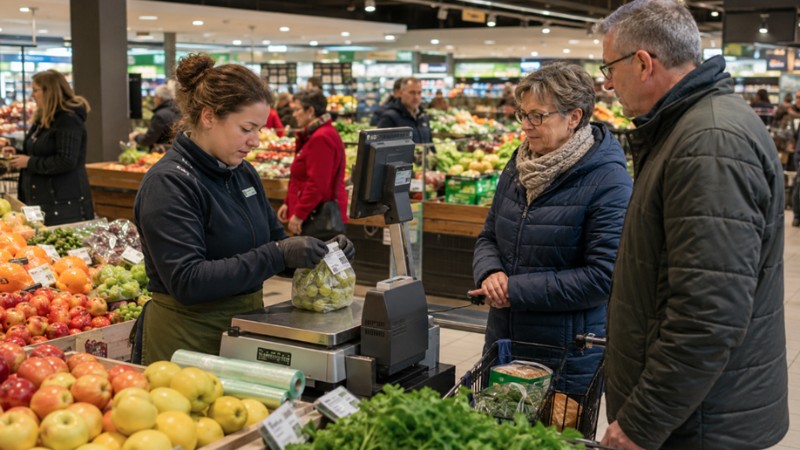
Fresh food retail has become one of the most operationally demanding areas of modern store management. Grocery retailers, supermarkets, deli counters, bakeries and bulk food stores must process thousands of variable-weight products every day while maintaining pricing accuracy, checkout speed and inventory visibility.
As retailers continue investing in store modernization, smart weighing and label printing systems are becoming an increasingly important part of grocery store infrastructure. What was once a standalone weighing device is now evolving into a connected retail system that supports pricing, barcode generation, POS integration, inventory workflows and even AI-powered product recognition.
For many retailers, the goal is no longer simply weighing products accurately. The focus has shifted toward improving workflow efficiency across the entire fresh food operation.
Why Traditional Fresh Food Weighing Workflows Create Problems
Fresh food departments operate very differently from packaged grocery categories. Products such as fruits, vegetables, deli items, bakery goods, meat and bulk foods are sold by weight, meaning pricing must be calculated dynamically during the shopping or checkout process.
Traditional workflows often depend heavily on manual input. Employees may need to search PLU codes, select products from outdated menus or manually apply labels. During busy hours, these extra steps slow checkout speed and increase the risk of pricing mistakes.
Inconsistent labels also create downstream problems. If barcode information does not match POS databases correctly, retailers can experience pricing discrepancies, failed scans and inventory inaccuracies.
For stores operating at scale, even small inefficiencies can quickly affect labor costs, customer wait times and operational consistency.
Retailers upgrading fresh food operations are increasingly adopting smart weighing scales that integrate directly with POS and inventory workflows.
What Smart Weighing and Label Printing Systems Actually Do
Modern retail weighing systems combine several functions into a single workflow. Instead of using separate devices for weighing, pricing and labeling, integrated systems allow retailers to manage the entire process through one connected platform.
A typical smart weighing and label printing system includes:
· Product weighing
· Automatic price calculation
· Barcode and label printing
· Product information management
· POS-compatible barcode generation
· Centralized pricing updates
In many grocery stores, the process works like this:
1. A product is placed on the scale
2. The item is selected manually or identified automatically
3. The system calculates the total price based on weight
4. A barcode label is printed instantly
5. The POS system scans the label during checkout
6. Sales and inventory data update automatically
This workflow reduces manual steps while improving consistency across store operations.
Retailers are increasingly deploying these systems across produce departments, deli counters, seafood stations, bakery sections and self-service fresh food areas.
How Smart Scales Improve Grocery Store Efficiency
One of the biggest advantages of smart retail scales is workflow speed.
Traditional produce weighing often requires employees to memorize PLU codes or search product menus manually. Integrated weighing systems simplify this process and reduce transaction friction during peak shopping periods.
For retailers, the operational benefits can be significant.
Faster Checkout and Shorter Queues
Integrated label printing scales help reduce manual input during checkout. Barcodes generated directly from the weighing system improve scan accuracy and reduce delays at POS terminals.
This becomes especially important in high-volume grocery environments where checkout efficiency directly affects customer satisfaction.
Fewer Pricing Errors
Price inconsistencies remain a major operational issue in fresh food retail. Smart weighing systems automatically synchronize pricing data, helping reduce manual calculation mistakes and mismatched labels.
More accurate pricing also improves customer trust and reduces staff intervention at checkout.
Improved Inventory Accuracy
Because weighing systems connect with POS workflows, retailers gain more accurate sales and product movement data. This helps stores monitor shrink, improve replenishment planning and maintain better visibility across fresh inventory categories.
Lower Labor Pressure
Retailers continue facing staffing shortages and rising labor costs. Smart weighing systems reduce repetitive manual tasks and simplify employee training, particularly in departments with high product turnover.
Self-service weighing stations can also reduce pressure on store associates during busy periods.
How AI Recognition Is Changing Retail Weighing Systems
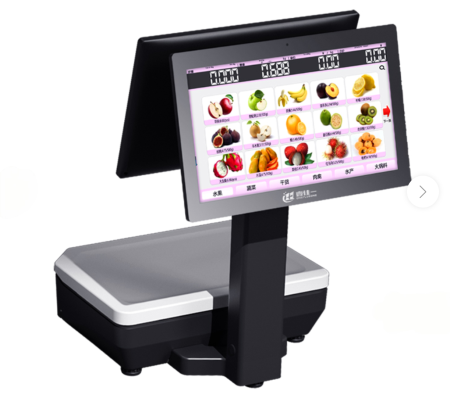
Artificial intelligence is beginning to reshape retail weighing technology.
New AI recognition scales use cameras and computer vision to identify products automatically. Instead of requiring customers or employees to search for PLU codes manually, the system can recognize fruits, vegetables and other fresh products directly through image analysis.
This technology is becoming increasingly common in modern grocery environments, especially in self-service produce areas.
AI-powered weighing systems can help retailers:
· Reduce product lookup time
· Improve self-checkout usability
· Minimize training requirements
· Reduce PLU-related errors
· Speed up fresh food transactions
Some vendors are also integrating machine learning models that improve recognition accuracy over time as product databases expand.
As retailers continue investing in automation and frictionless checkout experiences, AI recognition scales are likely to become a larger part of future grocery store infrastructure.
Why POS Integration Matters More Than Ever
A weighing system is no longer an isolated piece of hardware.
Modern grocery operations depend on accurate synchronization between scales, POS systems, pricing databases and inventory platforms. Without proper integration, retailers risk inconsistent pricing, failed barcode scans and disconnected inventory records.
This is why POS integration has become a critical consideration when selecting a grocery weighing system.
Integrated weighing and labeling systems help retailers maintain:
· Consistent pricing across stores
· Centralized product updates
· Barcode compatibility with POS software
· Unified inventory data
· Smoother checkout workflows
For multi-store retailers, centralized management is especially important. Product names, prices and barcode formats often need to be updated simultaneously across multiple locations.
As grocery operations become increasingly data-driven, connected hardware ecosystems are becoming essential for operational consistency.
What Retailers Should Consider Before Choosing a Smart Weighing System
Not every retail environment requires the same type of weighing solution.
A supermarket produce department has different workflow requirements from a butcher shop, bakery or specialty bulk food retailer. Before investing in a new system, retailers should evaluate several operational factors.
Label Printing Capability
Some stores only require basic weighing functions, while others need detailed barcode labels containing pricing, ingredients, expiration dates or traceability information.
POS Compatibility
The weighing system should integrate smoothly with existing POS software and barcode workflows. Poor compatibility can create operational issues during checkout.
Legal-for-Trade Certification
Retailers selling products by weight typically require legal-for-trade certified equipment depending on local regulations. Compliance requirements vary by market, making certification an important purchasing consideration.
Self-Service Support
Many retailers are expanding self-service fresh food areas. Systems designed for customer-facing use should prioritize usability, fast recognition and simple interfaces.
Durability and Maintenance
Fresh food environments can be demanding. Retailers should consider hardware durability, cleaning requirements, software support and long-term maintenance costs before deployment.
Smart Weighing Systems Are Becoming Part of Modern Store Infrastructure
Retail weighing technology is evolving beyond simple product measurement.
Today's smart scales are increasingly connected to broader retail infrastructure, supporting checkout operations, pricing workflows, inventory visibility and customer experience initiatives across fresh food departments.
As grocery retailers continue modernizing stores, integrated weighing and label printing systems are becoming part of larger digital transformation strategies focused on operational efficiency, automation and connected store ecosystems.
For retailers managing high-volume fresh food workflows, smart weighing systems are no longer just convenience tools. They are becoming foundational components of modern grocery operations.