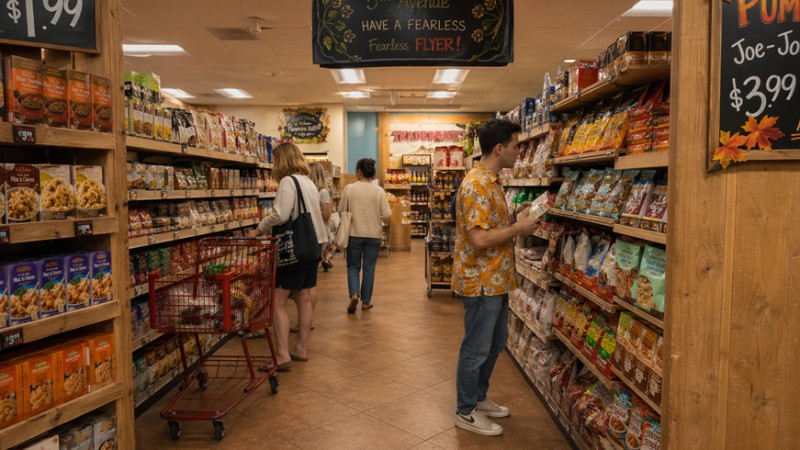
Grocery Market Sees Shift Away from Traditional Supermarkets
Specialty and discount grocers are continuing to outperform traditional supermarket chains in the U.S., as changing consumer behaviour reshapes the competitive landscape.
A recent industry analysis shows that overall grocery spending declined by approximately 3% year over year for the 12 months ending February 2026, yet certain retail formats are still delivering growth and attracting consistent shopper demand.
Trader Joe's Emerges as a Leading Performer
Trader Joe's stood out as one of the strongest performers in the category, recording year-over-year growth of more than 3% and outperforming the broader grocery sector.
The retailer continues to attract a wide customer base across income levels and age groups, with particularly strong growth among younger shoppers. It has also maintained high levels of customer retention, with repeat purchase behaviour exceeding that of several competitors.
Notably, shoppers who primarily buy groceries elsewhere are still allocating a significant share of their spending to Trader Joe's, reinforcing its role as a complementary destination within the grocery ecosystem.
Specialty Grocers Expand Appeal Across Income Groups
The report highlights that specialty grocery retailers, including Whole Foods Market and Wegmans, are gaining traction across low-, middle- and high-income households.
This broad-based growth suggests that factors beyond price — such as product differentiation, private-label offerings and curated assortments — are resonating with a wide range of consumers.
In contrast, traditional supermarket operators are experiencing declines across all income segments, with the most pronounced reductions among lower-income shoppers.
Discount Grocers Stabilise After Period of Rapid Growth
Discount grocery chains such as Aldi and Lidl saw significant gains between 2022 and mid-2024, as consumers shifted toward lower-cost options.
However, the pace of growth in this segment has moderated since mid-2025, indicating that the earlier wave of “trading down” may be stabilising.
Consumer Loyalty Shifts Toward Distinct Retail Propositions
The findings suggest that shopper decision-making is becoming more deliberate, with consumers favouring retailers that offer a clearly defined value proposition.
According to Consumer Edge, loyalty is increasingly driven by either strong price positioning in discount formats or differentiated product experiences in specialty stores.
Traditional supermarkets, positioned between these two models, are facing sustained competitive pressure.
Market Structure Continues to Evolve
The current trend points to a grocery market that is becoming more polarised, with growth concentrated among retailers that offer either strong value or distinctive product positioning.
As consumer expectations continue to shift, retailers with a clear identity and consistent customer engagement are likely to remain better positioned to capture market share.
Reported by Chain Store Age.